In this article
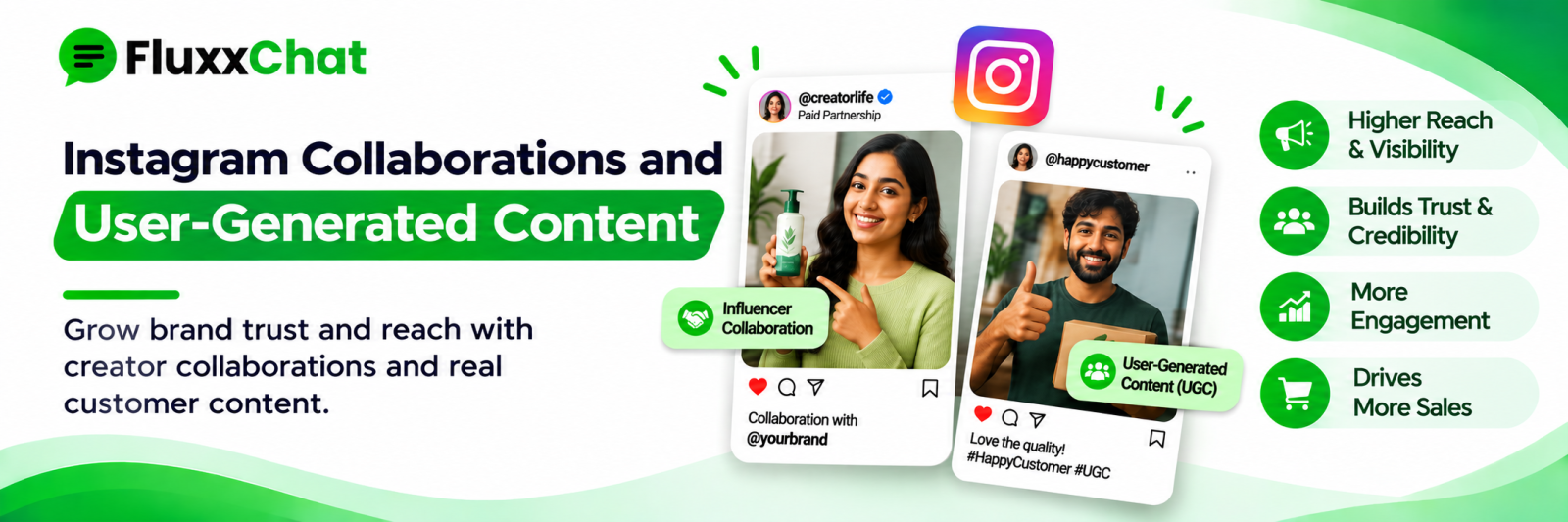
A photograph of your product taken by a customer outperforms your professional shoot, because people trust other customers. It is also free, and it arrives continuously if you build a system for it.
Most businesses receive this content already — in DMs, in story tags, in reviews — and do nothing with it.
Where customer content comes from
Source | How to capture it |
Story mentions and tags | Automated thank-you DM, then ask to reshare |
DM photos after delivery | Ask at the right moment |
Comments with photos | Reply and ask |
Google and platform reviews | Ask for a photo in the follow-up |
Branded hashtag | Prompt customers to use it |
Unboxing videos | Encourage with packaging that invites it |
WhatsApp replies after delivery | Where most Indian customers actually respond |
Story mentions are the most under-used. A customer who tags you is already advertising for you; most businesses see it, feel pleased, and do nothing. An automated thank-you plus a request to reshare converts a large share of them.
See our story automation guide.
Ask at the right moment
Timing matters more than wording. Ask:
• Two to five days after delivery, once they have used it
• Immediately after a positive comment or review
• After a successfully resolved complaint, which produces unusually warm advocates
• At the end of a service, before the feeling fades
The ask:
So glad you like it! 😊 If you post a photo, tag us @[handle] — we love sharing customer pictures. Totally fine if not!
Light, optional, no pressure. A demanding ask gets ignored.
Permission is not optional
Reposting someone’s photograph without asking is both a copyright issue and a trust issue, even when they tagged you.
• Ask explicitly: “Can we share this on our page?”
• Get a clear yes in writing, in the chat
• Say where you will use it: Instagram only, or website and ads too; these are different permissions
• Always credit the creator
• Remove it if they later ask you to
• Keep a record of the permission with the content
For paid advertising use, be explicit. “Can we share this?” does not cover running it as an ad for six months. Ask separately, and for commercial creators, put it in writing properly.
Never use a photograph showing a child without the parent’s explicit permission, and be careful with anything showing a person’s home, vehicle number plate or location.
Collab posts
Instagram’s collaboration feature puts one post on two accounts, reaching both audiences.
Works well with:
• Complementary local businesses: a boutique and a jewellery store, a gym and a nutritionist, a café and a bakery
• Local micro-creators
• Customers with engaged followings
• Suppliers and partners
• Event co-hosts
How to approach a collaboration:
Hi [Name], we love what you do. We’re a [business] in [area]. Would you be interested in a collab post? We’d feature [specific idea] — happy to work around whatever suits you.
Specific, local, and offering something. Mass-DMing creators with a template gets ignored.
Micro-creators usually beat large accounts
For local businesses, a creator with a few thousand genuinely local followers often produces more enquiries than one with a hundred thousand scattered nationally.
What to look for:
• Audience in your city
• Comments that look like real conversation, not emoji strings
• Content that fits your category
• Engagement rate relative to follower count
• Previous brand work that looked natural
What to avoid: accounts with huge follower counts and almost no comments, or comments that are all generic praise from accounts with no posts.
Incentives, and the rules
If you give anything of value — free product, discount, payment — for content, that is a material connection, and Indian advertising guidelines require disclosure.
• The creator must clearly disclose it: #ad, #sponsored, “paid partnership”, or Instagram’s paid partnership label
• Disclosure must be visible without tapping “more”
• Do not ask creators to hide the relationship
• Do not script false claims or fake testimonials
This is enforced, and the reputational damage from an exposed undisclosed ad exceeds any benefit. Confirm current ASCI guidance and your obligations before running paid creator campaigns. This article is not legal advice.
Unpaid resharing of a customer’s organic post, with permission and credit, does not carry the same obligation — but if you gave them a free product to produce it, it does.
Make content easy to produce
• Packaging worth photographing
• A small card in the parcel: “Share your photo and tag us @[handle]”
• A visible, memorable branded hashtag
• A photogenic corner in your shop or restaurant
• A branded sticker or frame people can use in stories
Use the content properly
• Reshare to stories immediately, which prompts others
• Build a highlight of customer photos
• Use the best ones in feed posts, with credit
• Add them to your website’s testimonials
• Use in ads, with explicit permission
• Keep an organised library, by product and date
An abandoned “customer love” highlight from last year is worse than none. Keep it current.
Measure
Metric | Why |
Tags and mentions per month | Whether the asking system works |
Permission conversion rate | Whether your ask is well worded |
Engagement on UGC vs own content | UGC usually wins |
Enquiries from collab posts | Commercial result |
Cost per enquiry from creator work | Versus ads |
Reach from collaborations | Audience growth |
Compare UGC against your own polished content on saves and shares. For most product businesses the customer photo wins, which is a useful thing to show anyone arguing for a bigger photography budget.
Frequently asked questions
Do we need permission if they tagged us? Yes. A tag is not permission to repost. Ask, and keep the reply.
Should we pay creators? Only where the audience fit is right, and with disclosure. Start with customers and micro-creators; the economics are usually better.
What if a customer posts something negative? Respond publicly and helpfully. See our handling angry customers guide.
Ready to automate WhatsApp and Instagram?
Start with FluxxChat: campaigns, chatbot and a shared inbox for your team.
Get started free