In this article
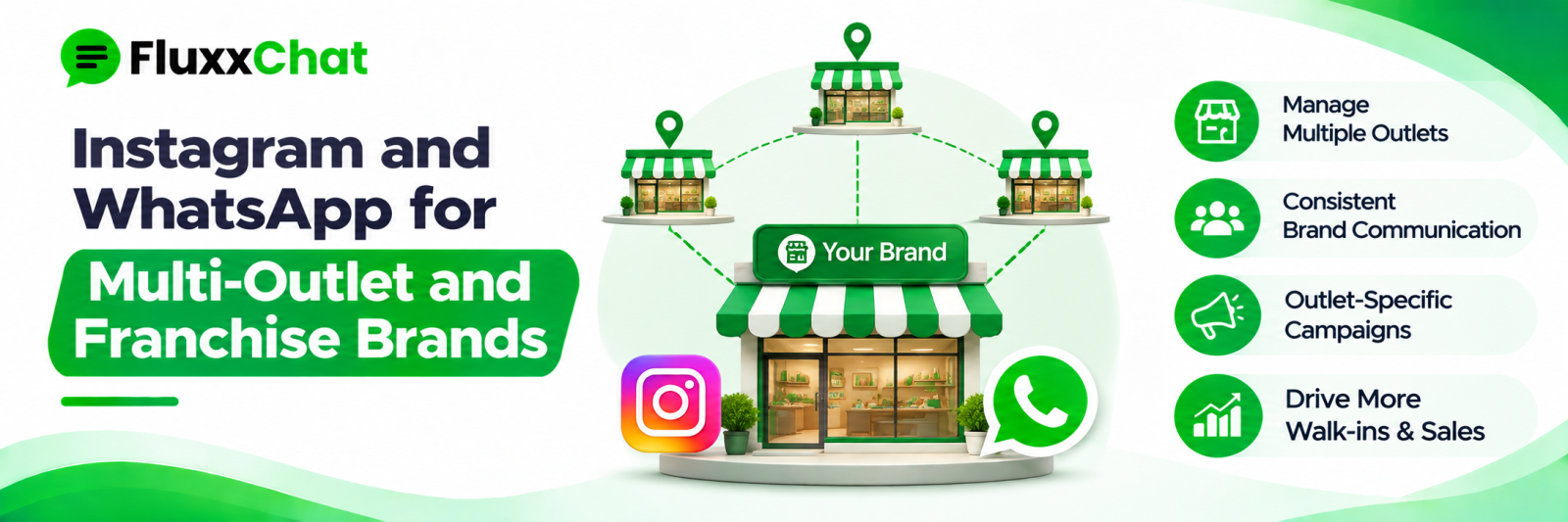
A brand with six outlets faces a question with no obvious answer: one Instagram account for the brand, or one per location? Get it wrong and you either lose local relevance or lose control of your brand.
The messaging side is harder still. An enquiry arrives asking about availability, and nobody knows which outlet it is for.
One account or several?
| One brand account | One per outlet |
Brand consistency | High | Hard to maintain |
Local relevance | Low | High |
Follower growth | Concentrated | Split |
Content effort | Centralised | Each outlet must post |
Local offers | Awkward | Natural |
Enquiry routing | Must be solved | Natural |
Control | Full | Depends on agreements |
A workable rule:
• Two or three outlets in one city: one account. Mention locations in posts.
• Several outlets across cities: one main brand account plus a local account per city, not per outlet.
• Franchise networks: one brand account, plus local accounts only where the franchisee will genuinely maintain them, under written brand rules.
Half-maintained local accounts are worse than none. An outlet page last posted to in March tells customers the outlet may have closed.
Routing enquiries to the right outlet
This is the operational problem. Solve it in the first automated reply:
Hi! 👋 Thanks for messaging [Brand]. Which branch can we help you with? 1 — RS Puram 2 — Saibaba Colony 3 — Peelamedu 4 — Home delivery / online
Then route the conversation to that outlet’s team, with the branch tagged on the contact record.
Alternatives: separate WhatsApp numbers per outlet (simple, but customers must find the right one), or location-based routing from the ad or post that generated the enquiry.
The single worst option is one inbox with no routing, where head office staff answer questions about stock in a branch they have never visited.
Shared inbox structure
• One inbox, with conversations assigned by branch
• Branch staff see only their own conversations
• Head office sees everything
• Contact records tagged with branch and transferable
• Response-time targets applied per branch, and measured
• Escalation path from branch to head office
This gives franchisees the autonomy to serve their customers and head office the visibility to know whether they are doing it.
Brand control on content
The most common franchise problem: outlets producing their own creatives, with the wrong logo, wrong colours and claims the brand never approved.
What works:
Control | How |
Template library | Pre-approved creatives outlets personalise with their branch details |
Content calendar | Head office supplies the core content each month |
Approval flow | Anything outside the templates needs sign-off |
Asset library | Logos, fonts, colours, photography, accessible to all outlets |
Written social policy | What outlets may and may not post |
Monitoring | Someone checks outlet accounts monthly |
Make the approved path easier than the unapproved one. If the template library is quick and good, outlets use it.
What local accounts should post
Give outlets the things only they can do:
• Photos of their actual team and premises
• Local events and participation
• Branch-specific offers, within brand rules
• Local customer stories
• Branch timings and holiday changes
• Area-specific content
And keep centrally: brand campaigns, product launches, corporate announcements, anything making a claim about the product.
Franchise agreements should cover this
Before a dispute, not after. Put in writing:
• Who may open social accounts in the brand name
• Who owns those accounts, which must be the brand
• Who owns the customer data from enquiries
• What happens to accounts and data when a franchise ends
• Brand usage rules
• Response-time obligations
• What the franchisee may and may not commit to on behalf of the brand
Account ownership is the one that causes real problems. A departing franchisee with the login to a page with 20,000 local followers is an expensive argument.
See the broader setup in our franchise website and software guide.
Local offers without breaking the brand
• Define which offer types outlets may run independently
• Set discount limits
• Require head office approval above the limit
• Keep brand-wide campaigns centrally run
• Make sure customers understand which offers are branch-specific, or you create disputes at the other branches
Reporting across outlets
Report | Why |
Enquiries per branch | Demand distribution |
Response time per branch | Service consistency |
Conversion per branch | Performance comparison |
Revenue from messaging per branch | Commercial result |
Follower growth per local account | Local marketing effort |
Complaints per branch | Quality issues |
Unanswered conversations per branch | The accountability number |
Branch comparison is the point. One outlet converting at half the rate of another is a training or staffing question that nobody can see without this data.
Common failures
• No routing, so enquiries sit with people who cannot answer them
• Abandoned local accounts
• Each outlet using its own tool, so no consolidated view
• Head office posting content with no local relevance
• Customers getting different answers from different branches
• Franchisee owning the account and the data
• No one monitoring outlet accounts
Frequently asked questions
Should every outlet have its own Instagram? Only where someone will genuinely maintain it. Otherwise one brand account with location tags works better.
One WhatsApp number or several? One, with routing, is usually cleaner for customers. Several works if each outlet publishes its own number clearly and consistently.
Who should own the accounts? The brand, always, with franchisee access granted and revocable. Put it in the agreement.
Ready to automate WhatsApp and Instagram?
Start with FluxxChat: campaigns, chatbot and a shared inbox for your team.
Get started free