In this article
Most small businesses already get referrals and do nothing to encourage them. A customer tells a friend, the friend walks in, and nobody knows it happened.
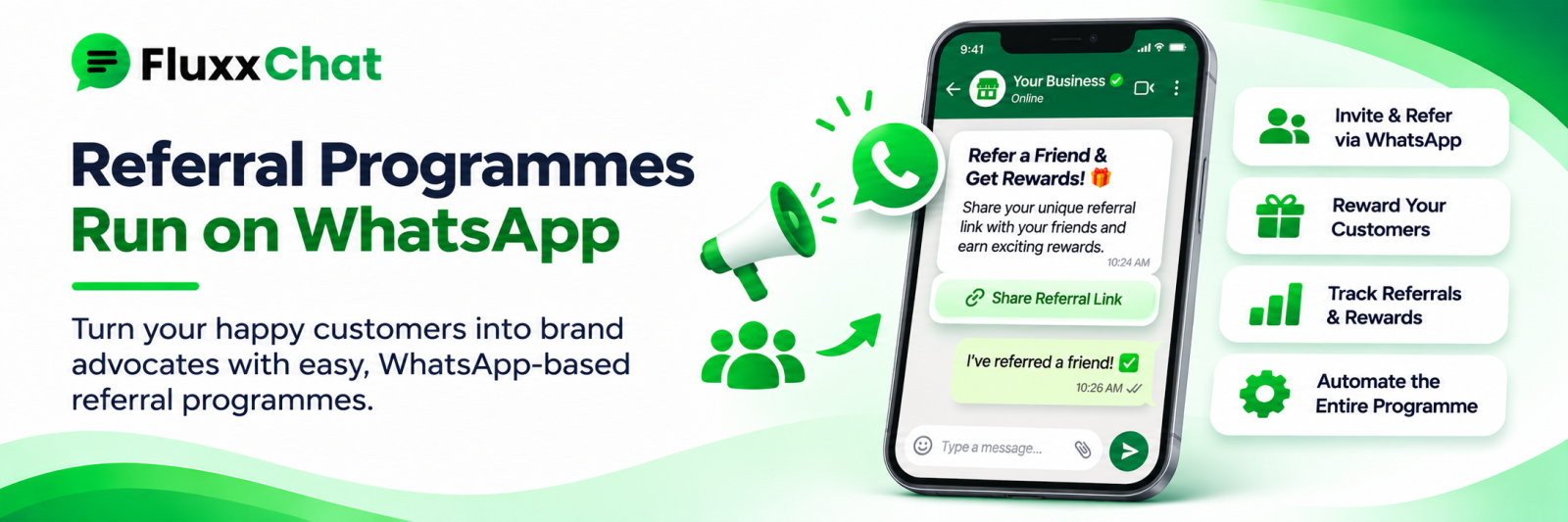
A referral programme makes that deliberate, trackable and repeatable. On WhatsApp it needs no app, no portal and no code the customer has to remember.
Reward structures
Structure | How it works | Best for |
Two-sided | Both referrer and friend get something | Most businesses; the friend has a reason to act |
One-sided to referrer | Only the referrer is rewarded | Where your product sells itself |
One-sided to friend | Only the new customer benefits | When you want volume and the referrer is motivated by goodwill |
Tiered | Bigger rewards after 3, 5, 10 referrals | High-frequency businesses |
Milestone | A larger reward at a threshold | Services with high value per customer |
Two-sided usually works best. The referrer feels they are giving a benefit rather than extracting one, which makes the ask comfortable.
Designing the reward
• Worth having, but less than the margin on a new customer
• Simple to explain in one sentence
• Paid when the friend actually buys, not when they are referred
• Not cash, usually; credit, a free service, an upgrade or a product works better and costs less
• Clear expiry
Calculate your acceptable reward from what a customer is worth. If a new customer brings ₹[X] in margin, a reward meaningfully below that is affordable and profitable.
Tracking without an app
The practical problem: how do you know who referred whom?
Method 1 — Unique link. Each customer gets a WhatsApp link with their reference embedded. The friend clicks and arrives with a pre-filled message carrying the code.
“Hi, [Name] referred me”
Method 2 — Referral code. Each customer has a short code. The friend mentions it. Simple, works offline, prone to forgetting.
Method 3 — Ask the new customer. “How did you hear about us?” captured at first contact. Lowest effort, least accurate, and still better than nothing.
Method 4 — Referrer submits. The customer sends you the friend’s name and number, with the friend’s knowledge. Be careful here: sending a message to someone who did not contact you is unsolicited outreach, which platform rules prohibit. The friend should initiate.
Use method 1 as the primary, with method 3 as the fallback.
When to ask
Timing decides everything.
Moment | Why it works |
Right after a positive feedback score | Peak goodwill |
After a successful delivery or service | The value is fresh |
After a problem was resolved well | Recovered customers are unusually loyal |
After a repeat purchase | They have decided you are reliable |
When they compliment you unprompted | Obvious, and often missed |
Never ask before the customer has experienced the product, or while a complaint is open.
Messages
The ask, after a 5-star feedback reply:
So glad you’re happy 😊 If you know someone who needs [service], share this link — they get [friend reward] and you get [your reward] when they order. [link]
The referral arrives:
Hi! Welcome 👋 [Referrer name] sent you — you get [reward] on your first order. What are you looking for?
Reward confirmation to the referrer:
Good news — [friend’s first name] placed an order 🎉 Your [reward] is ready. It’ll apply automatically on your next purchase.
That third message matters more than people expect. A referrer who is told their reward has been credited refers again. One who hears nothing assumes the programme does not work.
Promote it where customers already are
• In the post-purchase message sequence
• In your WhatsApp auto-reply menu
• A highlight on Instagram
• A card in the parcel
• A QR at the counter
• Mentioned by staff at billing
• In your monthly statement or invoice
Staff mentioning it at billing is consistently the highest-performing channel for in-store businesses, and the one that needs reminding.
Fraud and abuse
Referral programmes attract gaming.
• Self-referral using a second number
• Fake accounts
• Referrals who order and immediately cancel
• One person referring a long chain of disposable numbers
Controls:
• Reward only after the friend’s order is delivered and payment cleared
• Reward reversed if the order is cancelled or refunded
• Cap the number of rewards per referrer per month
• Flag referrals from similar numbers or the same address
• Require the friend to be a genuinely new customer, checked against your database
• Manual review above a threshold
Set these before launching, not after you notice.
Rules
Business-initiated WhatsApp messages need opt-in and approved templates. In particular:
• You may message your own customer about the programme if they opted in
• You may not message the referred friend until they contact you
• The friend’s details should not be added to your marketing list until they consent
See our data and consent guide.
Measure
Metric | Why |
Referral links shared | Whether customers engage with it |
Referred customers acquired | Volume |
Referral conversion rate | Usually higher than other channels |
Cost per referred customer | Reward cost; compare with ad cost |
Revenue from referred customers | Value |
Retention of referred customers | Usually better than average |
Top referrers | People worth thanking personally |
Referred customers typically retain better than customers from ads. Measure it; it usually justifies a more generous reward than businesses are initially comfortable with.
Why most programmes fail
• Nobody is ever asked
• The reward is too small to bother with
• Tracking is unreliable, so rewards are not paid
• The referrer is never told their reward was credited
• Launched once, never mentioned again
• Staff do not know it exists
The fix for all six is operational, not creative: build the ask into your existing message flows and tell staff about it weekly.
Frequently asked questions
What reward works best? Something useful from your own business, worth meaningfully less than your margin on a new customer.
Can we message the referred friend directly? No. They must contact you first. Give the referrer a link to share instead.
How do we know referrals are genuine? Pay only after a completed, paid order, cap rewards per referrer, and check against your existing customer list.
Ready to automate WhatsApp and Instagram?
Start with FluxxChat: campaigns, chatbot and a shared inbox for your team.
Get started free