In this article
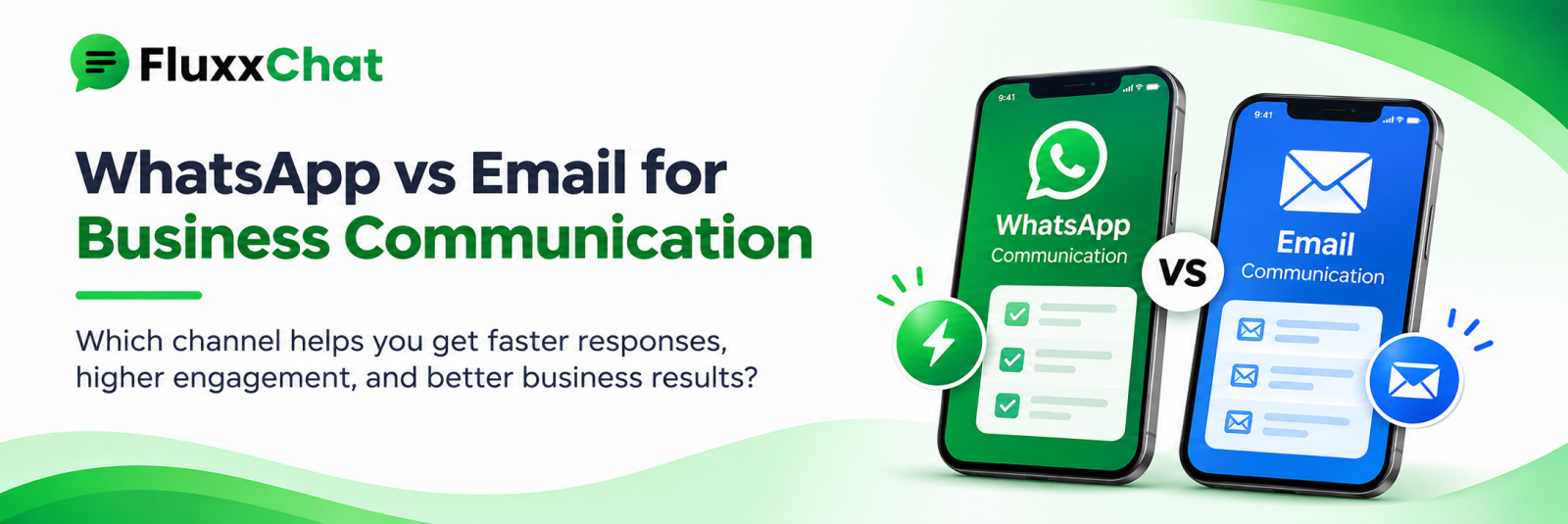
Most Indian businesses use both and have never decided which is for what. Quotations go on WhatsApp, invoices on email, follow-ups on both, and nobody can find the thread where a price was agreed.
Deciding this once removes a surprising amount of daily friction.
The honest comparison
| ||
Read rate | Very high, usually within minutes | Low, often never |
Response speed | Minutes | Hours or days |
Formality | Casual | Formal |
Record-keeping | Poor unless you use a proper inbox | Good, searchable, archived |
Legal weight | Usable as evidence, but messier | Cleaner audit trail |
Attachments | Size-limited; images and PDFs work well | Large files, multiple formats |
Long content | Unreadable | Fine |
Threading | Everything in one stream | Per subject |
Cost | Charged per business-initiated message on the API | Essentially free |
Reaching the right person | One phone, one person | CC, forward, multiple recipients |
Automation | Strong, with clear rules | Strong, less immediate |
A simple rule
WhatsApp for attention. Email for record.
Anything that needs to be read now goes on WhatsApp. Anything that needs to be found in eighteen months goes on email. Most important things go on both: the document by email, a one-line note on WhatsApp saying it has been sent.
What belongs on WhatsApp
• Order confirmations and delivery updates
• Appointment reminders
• Payment reminders with a link
• Quick questions and clarifications
• Price enquiries and quick quotes
• Photographs of products, work in progress, damage
• Time-sensitive anything
• Consumer customer service
• Reaching people who do not check email, which is most consumers and many small business owners
What belongs on email
• Formal quotations and proposals
• Contracts and agreements
• Invoices, for the record
• Statements of account
• Anything long or detailed
• Communication involving several people at a company
• Anything you may need in a dispute
• Specifications, drawings, large files
• Compliance and statutory communication
• Anything where you need to CC someone
What belongs on both
For B2B especially:
Email: the quotation PDF, with full terms. WhatsApp: “Hi [Name], sent the quotation to your email just now — ₹[amount] for [scope], valid till [date]. Shall I walk you through it?”
The email is the record; the WhatsApp message is what makes it get read today instead of next week. See our B2B messaging guide.
Cost matters at volume
Business-initiated WhatsApp messages are charged by category, and marketing messages cost more than utility ones. Email costs almost nothing.
Practical consequence: use email for bulk, non-urgent communication such as newsletters and statements, and WhatsApp for the messages where the read rate justifies the cost.
Sending a monthly newsletter to 5,000 contacts on WhatsApp is an expensive way to get opted out of.
Record-keeping is the real weakness
WhatsApp’s problem is not the medium; it is that conversations live on individual phones.
• A price agreed in a chat on a salesperson’s phone is not accessible to anyone else
• When that person leaves, the history leaves
• Nobody can search across conversations
• There is no audit trail
A shared inbox on the Business Platform fixes this: conversations belong to the business, are searchable, and survive staff changes. That single change is what makes WhatsApp acceptable for commercial communication.
See our shared team inbox guide.
Email still has a deliverability problem
If your invoices and quotations go to spam, email’s advantages do not apply.
• Set up SPF, DKIM and DMARC properly
• Use your own domain, not Gmail
• Avoid attachments and wording that trigger filters
See our business email setup guide.
Consent differs
• Email: marketing generally requires consent and an unsubscribe option
• WhatsApp: business-initiated messages require opt-in and approved templates, and the platform enforces this through quality ratings and blocks
Neither is a free channel to message whoever you like. See our data and consent guide.
Set a policy and tell your team
Write down, in one page:
Communication | Channel |
Enquiry response | WhatsApp, immediately |
Quotation | Email + WhatsApp note |
Order confirmation | WhatsApp + email |
Invoice | Email + WhatsApp note |
Payment reminder | |
Statement of account | |
Contract | |
Delivery update | |
Complaint | Wherever it arrives; resolve there |
Internal | Neither; use your own tools |
Then make sure both channels feed one customer record, so a conversation started on one can be continued on the other. See our omnichannel guide.
Frequently asked questions
Is WhatsApp legally valid for business agreements? Messages can be evidence, but a signed document on email or e-signature is cleaner. Take legal advice for anything significant.
Should we stop using email? No. It remains better for records, long content, multiple recipients and bulk communication.
Which do customers prefer? Consumers overwhelmingly prefer WhatsApp. B2B buyers usually want both: WhatsApp for speed, email for the file.
Ready to automate WhatsApp and Instagram?
Start with FluxxChat: campaigns, chatbot and a shared inbox for your team.
Get started free