In this article
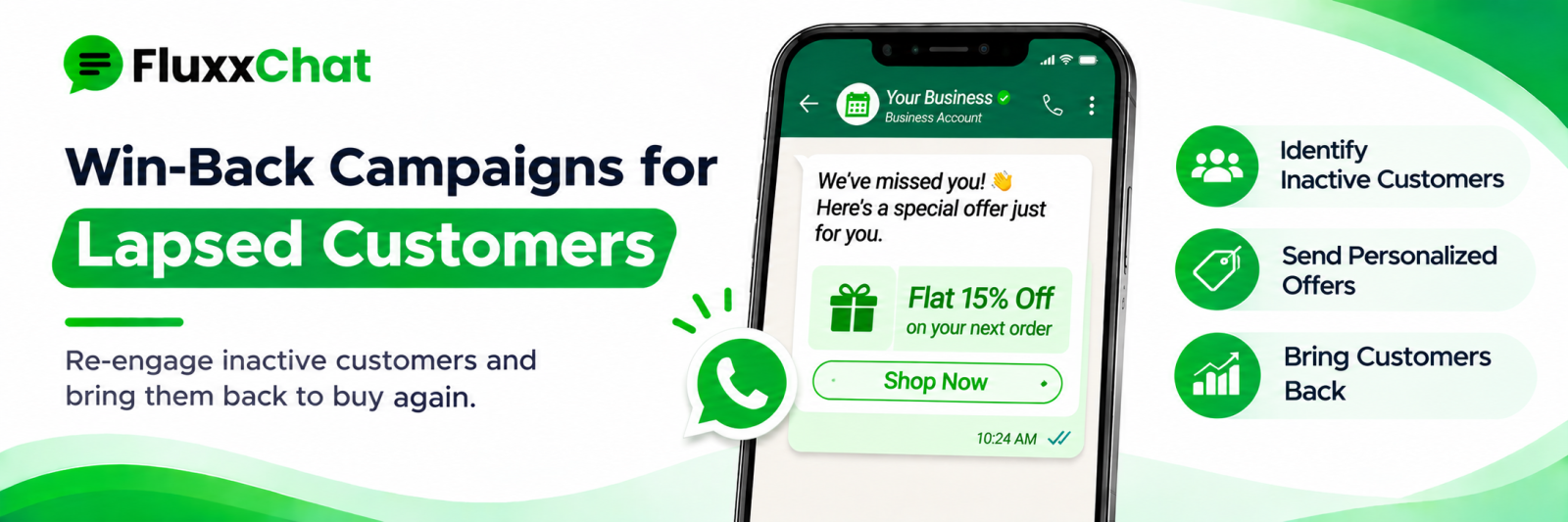
Every business has them: customers who bought regularly and then stopped. They did not complain and did not announce it. They simply went somewhere else, or forgot.
Winning one back costs far less than finding a new customer, and the conversation is easier because they already know you. Most businesses never try, because nobody is watching the data that would tell them who lapsed.
First, define “lapsed” for your business
This is not a universal number. It depends on your natural purchase cycle.
Business | Typical cycle | Lapsed at |
Grocery or daily needs | Weekly | 4–6 weeks |
Salon | 4–6 weeks | 3 months |
Restaurant | 2–4 weeks | 2–3 months |
Clothing | 2–3 months | 6 months |
Vehicle service | 6 months | 9–12 months |
Dental | 6 months | 12 months |
B2B supplies | Monthly | 2–3 months |
Jewellery | Yearly or occasion-led | 18–24 months |
Calculate your actual average gap between purchases, then set the lapsed threshold at roughly twice that. Anything earlier and you are chasing people who were always going to come back.
Segment before you send
Sending the same message to everyone wastes money and goodwill.
Segment | Approach |
High value, recently lapsed | A personal message or phone call from someone they know. Do not automate this group |
High value, long lapsed | Personal message, with a genuine question about what changed |
Regular value, recently lapsed | Automated sequence with a reason to return |
Regular value, long lapsed | One attempt, then move on |
One-time buyers | Different problem; they never became customers. Treat as a separate re-engagement |
Lapsed after a complaint | Never send a promotion. Resolve first, personally |
Lapsed because they moved away or closed | Suppress; you cannot win these back |
That last distinction matters. Some customers lapsed for reasons no offer can fix. Cleaning them out makes your numbers honest.
The sequence
Three messages, spread over two to three weeks. Not more.
Message 1 — we noticed, and we are asking, not selling
Hi [Name], it’s been a while since we saw you at [Business] 😊 Hope everything’s well. Is there anything we could have done better?
No offer. The question gets replies, and the replies tell you why people leave — which is worth more than the sale.
Message 2 — give them a reason to come back
Hi [Name], a few things have changed since you last visited: [specific new thing — new service, extended hours, new range]. Would be good to see you again.
Something concrete. “We miss you” is not a reason.
Message 3 — a clear, time-bound offer
Hi [Name], here’s [specific offer] if you’d like to come back, valid till [date]. If we’re not the right fit any more, no problem at all — just reply STOP and we won’t message again.
That closing line does real work. It gives a dignified exit, it reduces blocks, and the people who do not opt out are telling you something.
What to offer
In order of preference:
1. A genuine reason to return that is not a discount: a new service, a new range, extended hours, a problem fixed
2. A free add-on or upgrade: costs less than a discount, feels better
3. A modest discount with a deadline
4. A large discount — last resort; it trains customers to lapse deliberately
For high-value lapsed customers, consider offering nothing at all and simply having someone phone them. It works more often than any discount.
The question that pays for the campaign
Message 1 asks why they stopped. Collect and categorise the answers:
Reason given | What it tells you |
Price | Positioning, or a competitor undercutting |
Service problem | Something you did not know about |
Moved away or circumstances changed | Unwinnable; suppress |
Switched to a competitor | Ask what they offer |
Just forgot | Your contact frequency is too low |
No reason, just stopped | Usually means nothing memorable happened |
After fifty replies you will see a pattern. Fixing that pattern prevents the next hundred customers from lapsing, which is worth more than the win-backs.
Rules and limits
Business-initiated WhatsApp messages need opt-in and approved templates, and win-back messages are marketing, which is charged and treated more strictly than utility messages. Rules and pricing change.
Check Meta’s current WhatsApp Business Platform documentation before building this. See our templates guide.
Discipline:
• Three messages maximum, then stop for at least six months
• Honour opt-outs instantly and permanently
• Never send to customers with an open complaint
• Do not run win-back and a general campaign to the same person in the same week
• Deduplicate first, or someone gets it three times
Use the right channel per segment
Segment | Channel |
High value | Phone call, or a personal WhatsApp message from a named person |
Regular | WhatsApp sequence |
Email-only contacts | Email, where you have consent |
Instagram-only contacts | You cannot message them unprompted; reach them with content and ads instead |
For Instagram-only lapsed customers, a custom audience in ads is the compliant route, not DMs.
Measure honestly
Metric | Why |
Lapsed customers identified | The size of the opportunity |
Reply rate to message 1 | Whether the question works |
Reasons collected | The most valuable output |
Return rate | Share who bought again |
Revenue from returned customers | The result |
Cost per returned customer | Messages plus offer cost |
Opt-outs | Whether the campaign is annoying people |
Retention of returned customers after 90 days | Whether they actually came back, or just took the offer |
Hold back a control group that receives nothing. Some lapsed customers return on their own; without a control group you will credit the campaign for them and over-invest next time.
That last row matters too: a customer who redeems a 40% offer and never returns was not won back. They were bought, once, at a loss.
Prevention beats win-back
The cheapest win-back campaign is the one you do not need:
• Watch declining frequency, not just lapse. A customer buying monthly who moves to quarterly is leaving slowly
• Reach out at that point, not six months later
• Service and renewal reminders keep the relationship alive. See our milestone messaging guide
• Ask for feedback while they are still active. See our feedback and NPS guide
A business that notices falling frequency in month two rarely needs a win-back campaign in month twelve.
Frequently asked questions
What is a realistic win-back rate? It varies widely by category and by how long they have been away. Measure your own baseline rather than comparing to a published figure.
Should we discount to win customers back? Try a reason and a question first. Discount last, and keep it modest.
How often can we run this? Treat it as a continuous process on a rolling lapse date, not a quarterly blast to the same list.
Ready to automate WhatsApp and Instagram?
Start with FluxxChat: campaigns, chatbot and a shared inbox for your team.
Get started free